What Are io Games? Why Browser-Based .io Titles Have Millions of Daily Players

Ever watched a kid juggle ten browser tabs at once? One of them is almost certainly an io game. Slither.io alone was Google’s most-searched video game in the US for all of 2016 (Wikipedia). Agar.io grabbed that same crown a year earlier. A decade later, the io games genre is still pulling enormous daily numbers on browser-only delivery. So what counts as an “io game,” and why does this corner of the web keep printing players? Here’s the short version, the origin story, and the part most explainers get wrong.
TL;DR
- An io game is a free, browser-based multiplayer game with a .io domain or a .io-style design
- The .io suffix is the British Indian Ocean Territory ccTLD, delegated by IANA in 1997 (Wikipedia)
- Agar.io (April 2015) and Slither.io (March 2016) made the suffix a genre label
- The real moat is distribution: instant load, no install, shareable link, cross-device
- Browser games are a $8.01B market in 2026, up from $7.81B in 2025 (The Business Research Company)
What Is an io Game?
An io game is a free, browser-based multiplayer title with accessible controls and short session loops. Most are named with the .io top-level domain. That suffix is the genre’s calling card. The design pattern matters more. Here’s the actual defining checklist that holds up across the category:
- Free to play. No paywall, no install, no account required to start
- Browser-based. It loads in a tab. Chromebook, school laptop, work browser, phone
- Multiplayer by default. Arena, MMO-lite, or a shared persistent world
- Simple controls. Often mouse-only or one-button, easy to learn in seconds
- Short session loops. A round, a life, or a build session you can finish on a lunch break
One trait that gets misattributed all the time: permadeath. People associate it with the genre because it defined the original wave (Agar.io, Slither.io, Diep.io). It isn’t a category rule, though. Bloxd.io’s sandbox modes let you build for hours without dying. Krunker.io is a round-based FPS where you respawn within the match. 1v1.lol is build-and-fight, not blob-eat-blob. The genre has diversified well past the original format.
The .io suffix itself is the most honest definition. If the URL ends in .io and the game plays in a browser, you’re in io territory.
Where Did the “.io” in io Games Come From?
The .io top-level domain is officially the country code for the British Indian Ocean Territory. IANA delegated it in 1997, and the tech industry adopted it as shorthand for “input/output” (Wikipedia). It became a popular vanity TLD for startups long before any game used it. The shift from “tech ccTLD” to “genre label” happened in the back half of 2016. By then, Agar.io and Slither.io had both broken into Google’s top-searched video games lists.
The naming wasn’t planned. Valadares launched on the agar.io domain because the .io extension was cheap and available at the time. When clones followed, they all reached for the same suffix to ride the search demand. By late 2016, “io games” was a category on every casual gaming portal.
So no, you don’t need to be in the Indian Ocean to play one. The country code became a brand by accident.
How Agar.io and Slither.io Built the Genre
The whole category traces back to one playtest post. On April 28, 2015, 19-year-old Brazilian developer Matheus Valadares uploaded Agar.io. He posted it on 4chan’s /v/ board asking for feedback. Within weeks, the game was reaching around 5 million daily players (Wikipedia). It became Google’s most-searched video game in the US for 2015 (Wikipedia). It also beat Fallout 4 in overall search volume (VICE). One developer, no marketing budget, and the top of the search charts for the year.
Slither.io shipped less than a year later. Steve Howse released the browser version and an iOS app on March 25, 2016. It took the search-volume lead the following year (Wikipedia). By September 2017, Slither.io had been downloaded over 68 million times on mobile and played 67 million times in browsers. Howse considered Flash before settling on WebSockets for real-time multiplayer.
Agar.io and Slither.io did fix one design pattern in players’ heads. Simple shape on a dark grid, eat or get eaten, ranked leaderboard, permadeath. That’s the loop people picture when they hear “io game.” It’s the original recipe. The genre has broken in many new directions since. But those two titles set the template the rest of the field defined itself against.
Why Do io Games Have Millions of Daily Players?
The honest answer isn’t a clever game design trick. It’s distribution. Four things, in order of importance:
- Zero install friction. You click a link, the game loads, you’re playing. There’s no App Store gate, no download bar, no system requirements page. For a kid on a Chromebook or an adult on a locked-down work browser, that’s the only delivery model that actually works.
- Cross-device by default. The same URL plays on a school laptop, a phone, and a desk PC. No platform lock-in, no separate purchase, no rebuilding your progress on a new device.
- 3. Shareable in one link. A Discord message, a TikTok comment, a text. Casual gaming spreads through chat the way video spreads through TikTok. Native apps can’t do that.
- 4. Loops fit anywhere. A round of an io game runs five to fifteen minutes. That fits between classes, during lunch, on a commute, or while a build compiles. Nobody has time for a forty-hour console RPG at 11:42 on a Tuesday.
The numbers back this up. The global browser games market reached $7.81 billion in 2025. It’s projected to hit $8.01 billion in 2026 (The Business Research Company). HTML5 and WebAssembly closed most of the performance gap with native apps. Browsers are now a real first-class gaming target, not a hobbyist sandbox.
Our take: The mechanical design of io games is a lot less special than the discourse claims. Tens of native mobile games have similar short-loop multiplayer designs. The thing native mobile can’t replicate is the delivery model. The moat for the genre is distribution, not the eat-the-smaller-blob mechanic. That’s why the genre survived past its initial 2015 to 2017 viral peak. The browser is the platform, and the browser keeps winning more of the casual gaming surface.
Which io Games Are Worth Playing in 2026?
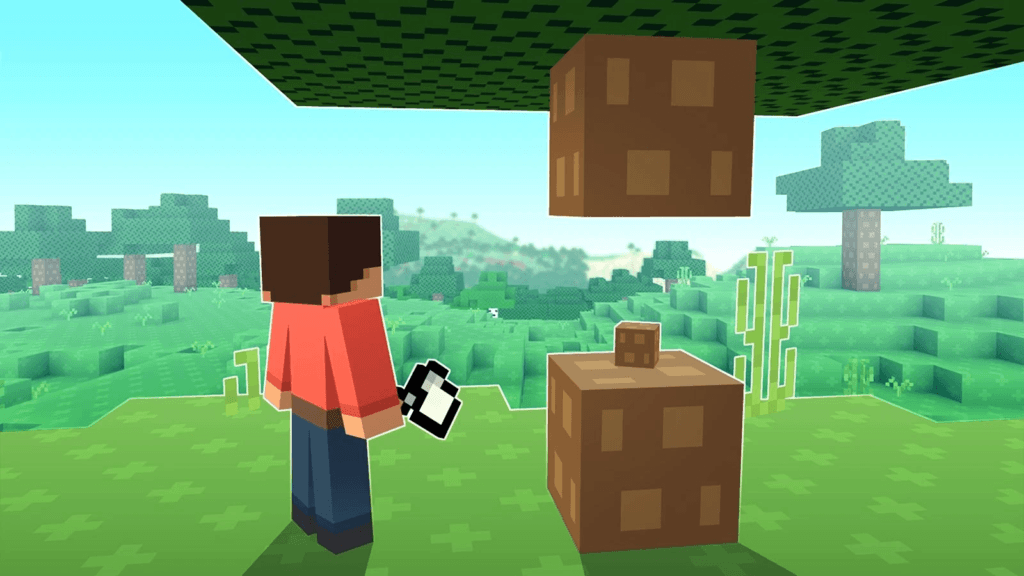
The headliner this year is Bloxd.io. WebGameDB’s live tracker showed around 20,400 players online on May 15, 2026. The 24-hour peak topped 31,000 (WebGameDB). It’s a sandbox-and-survival hybrid with Minecraft-style blocks and multiple game modes. The learning curve is friendly enough that middle-school players run private servers without a tutorial.
Beyond Bloxd.io, the genre has fanned out into a few clear subtypes:
- Original-format arena. Agar.io and Slither.io are still live. Both run cleanly in modern browsers and still post real concurrent numbers
- Round-based FPS. Krunker.io and 1v1.lol moved the suffix into the shooter category, with respawns and short matches instead of permadeath
- Battle royale. Surviv.io ran a 2D top-down battle royale with large multi-player lobbies before the original studio shut it down
- Building and sandbox. Bloxd.io, Wormate.io builder modes, and a handful of newer titles let you build instead of fight
The category lives across dozens of portals and on platforms that host browser-native titles directly. The best play for any new player is simple. Try one game from each subtype to find what loop you like. Most of them load in under five seconds and don’t need a sign-in to start a match.
Frequently Asked Questions
Yes, almost all io games are free. The standard business model is browser ads, plus optional cosmetic purchases or a battle pass. You don’t pay to enter, and most titles don’t require an account to play a first round (Wikipedia).
Most are safe for casual play, but moderation varies a lot by title. The original-wave games (Agar.io, Slither.io) allow custom usernames and skins, which can include user-typed text. For younger players, stick to titles with curated chat or no chat at all, like Bloxd.io’s standard public servers.
Yes, most modern io games are mobile-friendly. Slither.io shipped with iOS support on day one in March 2016. Most new io titles ship with mobile-responsive controls. The catch is screen real estate. Strategy-heavy io games with leaderboards and minimaps still play better on a laptop.
It’s named after the .io top-level domain. The .io ccTLD belongs to the British Indian Ocean Territory and was delegated by IANA in 1997 (Wikipedia). Tech companies adopted it as shorthand for “input/output.” Agar.io and Slither.io made it a genre label by 2016. The Indian Ocean has nothing to do with it.
Bloxd.io currently leads on concurrent-player tracking, with around 20,400 simultaneous players on WebGameDB as of mid-May 2026 (WebGameDB). Slither.io and Agar.io still pull large daily numbers, and Krunker.io continues to anchor the shooter subtype. The leader depends on the week and the metric.
The Short Answer
If you take one thing from all of this, take the definition. An io game is:
- Free and browser-based
- Multiplayer and fast to start
- Named with (or styled after) the .io domain
The genre started by accident on 4chan. It then became a Google search-trends winner two years running. It survived its viral moment by leaning into the one thing the browser does better than any native app. Instant, shareable, cross-device delivery. The flagship title used to be Agar.io, then Slither.io, and now Bloxd.io. The next one already exists somewhere, probably built by one developer who hasn’t shipped it yet.
Want a curated list of io-style and indie browser titles? See our roundup of the best indie web games on VIVERSE.