How Alphaputt Ported their Award-Winning Mobile Game to the Web with VIVERSE
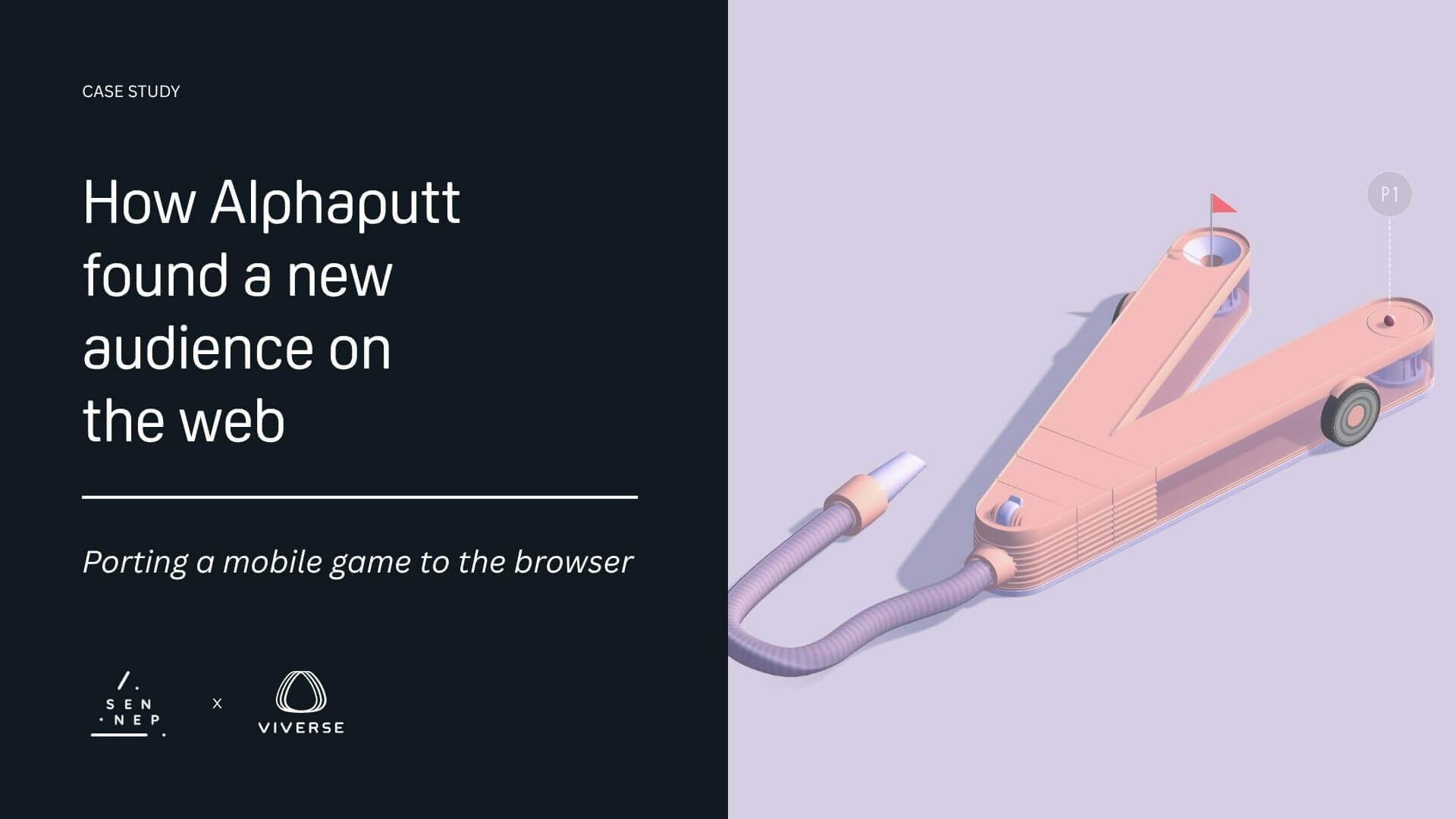

Even a great game can go quiet. Alphaputt launched on iOS in 2018 to real acclaim. Apple named it Game of the Day, it earned multiple editorial features, and the design community took notice fast. But over time, discoverability faded. The market had shifted, and a premium indie gem was getting buried under free-to-play titles and subscription bundles.
The answer wasn’t a redesign. It was a second home. In 2026, the Alphaputt team partnered with VIVERSE to bring the game to the web, free to play, on any device with a browser. The result is one of the clearest examples we’ve seen of porting a game to web done right, and the story behind it has a lot to teach any developer thinking about making the same move.
About Sennep Games
Alphaputt comes from Sennep Games, the games division of Sennep Ltd, a London-based design studio known for bringing genuine craft to every project they take on. Creative director Matt Rice and Hege Aaby lead the team, bringing a design-first sensibility to games that have earned recognition well beyond the games industry. Their portfolio spans mobile games OLO, OLO Loco, and Alphaputt.
That design pedigree matters to this story. Alphaputt earned a Lovie Award Gold and a D&AD Wood Pencil, among other awards and nominations. It wasn’t a game the team was going to port unless they could do it right.
Why Alphaputt Needed a Second Home
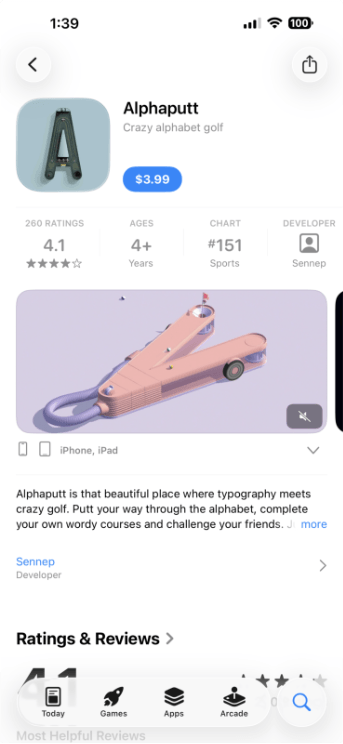
Alphaputt is an award-winning 3D mini-golf game built around typography. Each of the 26 levels is a letter of the alphabet, rendered as a miniature world with its own lighting, textures, and layered soundscape. It’s a polished, crafted experience, and at $3.99 USD on the App Store, players had to commit before they’d ever taken a shot.
“The App Store is enormous and competitive, and it eventually became difficult to justify ongoing investment in updates without a clear way to reach a new audience.“
— The Alphaputt team
In a market dominated by free-to-play, that upfront cost is a real barrier. The team got a sharp reminder of just how much it mattered when they ran a brief free promotion on the App Store.
“Normally the game gets a few hundred downloads a month. During that brief window we saw more than 26,000 in just a few days, with over 14,000 in a single day.“
— The Alphaputt team
The demand was there. The barrier was the price of entry. But simply making the iOS version free wasn’t the right answer. Alphaputt was designed as a premium experience, and retrofitting free-to-play mechanics would have changed what the game fundamentally is. As the team put it, “the game has a polished aesthetic and dropping ads into it felt like it would undermine that experience.” They needed a model that let them remove the cost without compromising the design.
Why the Web, and Why Now
The web wasn’t the original plan. But when the Alphaputt team started exploring what a web release would actually look like, a few things came together.
“A WebGL build running in the browser is almost indistinguishable from the native experience, which wasn’t really true back in 2018.” — The Alphaputt team
Second, the way players find games has changed. A link can live anywhere: in a press article, a design blog, a social post. On the App Store, that link takes you to a store page where you still have to decide to commit. On the web, it just opens the game.
“Click a link and you’re in. For a game built around quick, satisfying moments, that kind of instant access opens up a completely different kind of discovery.” — The Alphaputt team
There’s also a reach argument. Before the VIVERSE launch, Alphaputt could only be played on iOS. It’s now playable on desktop, Android, and iOS from a single build. For a game with a strong following in the design community, being playable on any device with a browser, from smartphones to desktops, was an option worth exploring.
Why VIVERSE for the Port
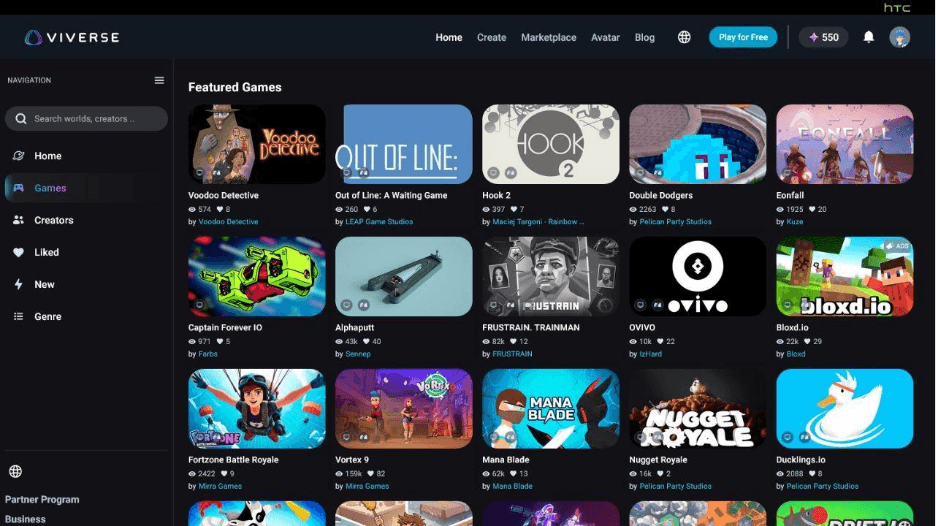
Once the team decided to pursue a web release, they needed the right platform. A friend had already launched a project on VIVERSE, which brought the team there to explore. What they found was an active community of developers and immersive 3D content that felt like a natural fit.
The biggest factor, though, was the monetization model. VIVERSE’s Partner Program pays creators based on engagement time rather than ad impressions, which meant the team could make Alphaputt free without introducing advertising. That was the model they’d been looking for.
“Players get instant, free access and we earn based on how long they actually play. That felt like the right trade-off for a game like ours.” — The Alphaputt team
The non-exclusive nature of the platform also mattered. “We weren’t being asked to take the game off the App Store or lock it to a single platform,” the team said. VIVERSE sits alongside their existing presence rather than replacing it.
And looking further ahead, VIVERSE’s VR roadmap was a genuine draw. The team had already built a VR prototype of Alphaputt and saw real potential in an immersive format. Knowing that VIVERSE has WebXR capabilities built in meant this partnership could lead somewhere beyond a one-off port. As they put it, “it opened up a longer conversation about where the game could go next, and that was a compelling reason to choose it over other options.”
What the Porting Process Actually Looked Like
The core team was small. A Unity development partner led the technical work, bringing in a second developer with web and backend experience as the web-specific challenges became clearer. On the Alphaputt side, the team handled QA and project management.
The intention was always a port, not a rebuild. The levels, mechanics, sound design, and visual style were staying exactly as they were. But the game was eight years old, and the codebase needed updating to a newer version of Unity before a WebGL build was even possible. Support from VIVERSE’s Creator Grant program helped fund some of that overdue technical work.
Timeline
- August 2025: Project agreement with VIVERSE
- September to October 2025: Refactoring and porting begins
- December 2025: First test build on VIVERSE
- February 12, 2026: Project approved and live
Six months from agreement to a live web game. For a small studio with a beloved but stalling title, that kind of timeline changes the conversation around legacy games entirely. Porting to the web isn’t a last resort. It’s a legitimate growth strategy, one that opens new audiences, removes purchase friction, and through VIVERSE’s Partner Program, generates revenue based on how long players actually play.
The Hardest Part: Getting Audio to Work in the Browser
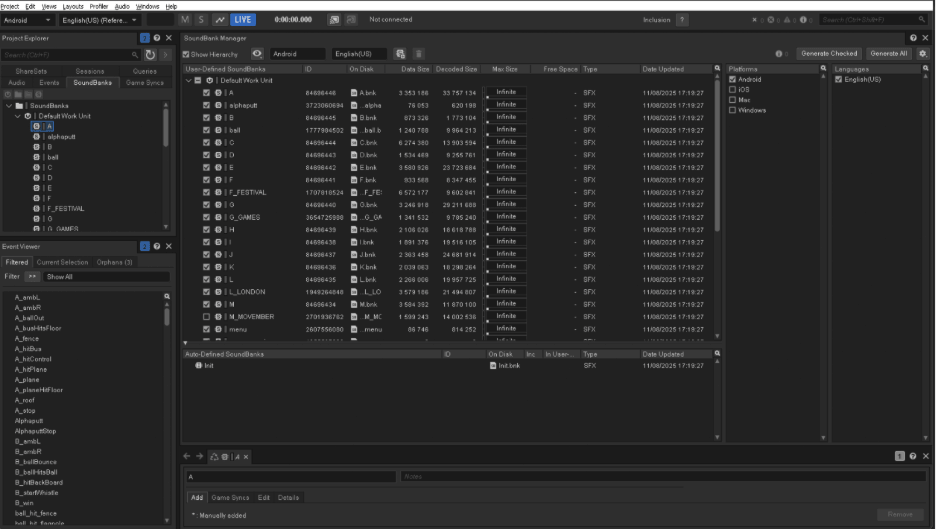
Alphaputt uses Wwise for its audio, a middleware solution that gives each level its own atmospheric soundscape responding in real time to the ball’s movement. It’s a core part of what makes the game feel alive. There was just one problem: Wwise doesn’t officially support WebGL.
This was the team’s biggest unknown going in, and it turned out to be the hardest thing to solve.
“Without it the game would have lost an important and joyful element. That was the thing we were most nervous about and, as it turned out, the thing that took the most work to solve.” — The Alphaputt team
Getting Wwise working in the browser required unlocking a hidden experimental option directly from the Wwise team. Even then, actually making it work in a web context required specific changes to how assets were hosted on the platform side.
This is where VIVERSE’s support made a real difference. Having direct access to the VIVERSE team through Discord meant specific technical questions got answered fast, without waiting on formal support tickets. The team knew exactly what they needed, and as they put it, “VIVERSE just got on with it, quickly and without fuss.”
Once the audio was playing correctly, there was still the memory problem to solve. The original mobile build loaded all audio upfront, one large bundle. That’s fine for a native app. In a browser, it caused serious memory issues on mobile.
The solution was to split the audio into individual bundles per level, each loading in and unloading as the player moves through the game. That brought the initial audio load down from around 62MB to 4MB. But getting there wasn’t quick.
“It was the diagnosis that took the time. That is often the way with performance issues and it is a good reminder to build in time for the unknown when scoping this kind of work.” — The Alphaputt team
What Surprised Them (In a Good Way)
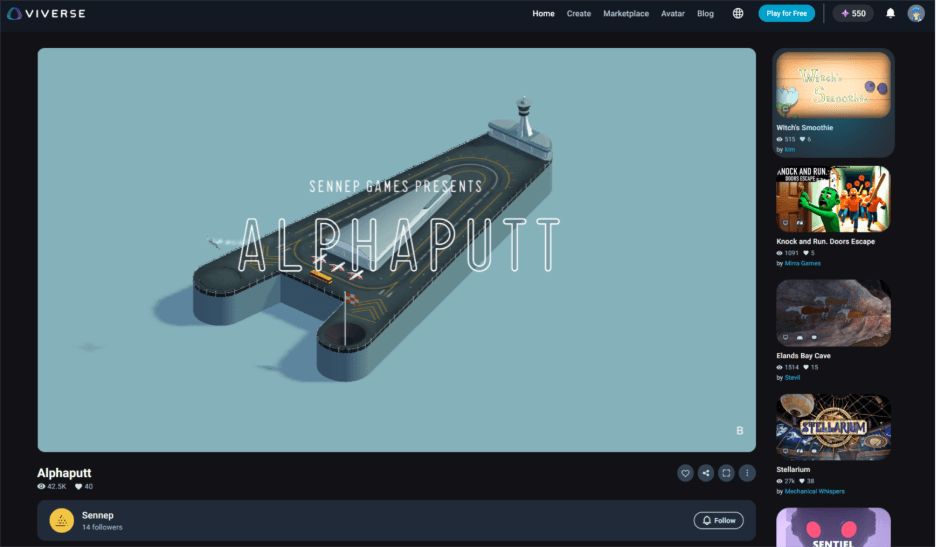
Not everything about the port was a grind. Some of the surprises were genuinely good ones.
The biggest was desktop. Alphaputt was designed for a small mobile screen, but the team discovered it translates beautifully to a larger display. The detail in each letter, the lighting, the textures, the little animated touches in every scene, all of it holds up well at a bigger size.
“In some ways it is a better experience than mobile.” — The Alphaputt team
The mouse controls are a big part of why. As the team described it, “right click to rotate the letter and scroll to zoom feels surprisingly natural, and in some ways more precise and satisfying than touch.” A mechanic designed entirely around touch turned out to translate beautifully to a mouse, adding a deliberate, considered quality to the putting that suits the game well.
The conversion data tells an interesting story too. On the paid App Store, less than 1% of visitors become players. During the free promotion, that jumped to around 16%. On the web, roughly half of all visitors start playing.
Engagement once players are in has been strong as well. Average session lengths of around ten minutes are solid for a browser game. The top 10% of players are staying for twenty minutes or more, which suggests that when people find Alphaputt, they really settle into it.
What comes next is just as interesting. The team has VR on the roadmap, and they’ve already built a prototype. Alphaputt’s typographic mini-worlds, they say, lend themselves naturally to an immersive format. There’s also a community challenge taking shape. The game’s Par-fection mode tasks players with completing the full A to Z course, with the ultimate goal of a hole-in-one on every letter. As far as the team knows, nobody has ever done it. With Alphaputt now free and instantly accessible to anyone with a browser, a global challenge around that feels, for the first time, like a real possibility.
Lessons for Developers Considering a Web Port
The Alphaputt team came away from this project with clear, practical advice for any developer thinking about porting a game to web.
Audit your audio middleware early
If you’re using a middleware audio solution, find out what its WebGL support situation is before you commit to anything. Audio was the biggest technical challenge here by some distance, and understanding the full shape of that problem earlier would have helped.
Think about asset loading before you start
Mobile games are often built to load everything upfront. Browsers are much less forgiving. If you can restructure your asset loading to be dynamic from the start, you’ll save yourself a meaningful amount of work later. And when you do hit performance problems, budget time for diagnosis. The fix is often straightforward once you understand what’s actually happening.
The web changes the player relationship, not just the platform
People arrive through a link with no prior commitment and no money spent. That’s a challenge, but it’s also a real opportunity. As the Alphaputt team put it, “if your game can grab someone in the first thirty seconds it has a chance to find an audience it would never have reached through a store.”
Build with portability in mind from day one
With Alphaputt, the web was an afterthought, and that added meaningful work to the port. The decisions you make early about how a game is structured either make it easier or harder to bring to new platforms later. Unity’s multi-platform capabilities are a genuine strength. Use them deliberately.
VIVERSE deployment is straightforward once your build works
VIVERSE accepts a standard Unity WebGL build. You can upload a zip directly through VIVERSE Studio, or publish via the VIVERSE CLI. Once the hard technical work was done, getting Alphaputt onto the platform wasn’t a barrier.
Play Alphaputt on VIVERSE
Alphaputt is free to play now on VIVERSE, on any device with a browser. All 26 levels, the full sound design, and the original experience, intact.
Play in any browser: Alphaputt on VIVERSE.
If you’re a developer thinking about porting a game to web, VIVERSE is worth a closer look. The Partner Program lets you earn based on player engagement, not ad clicks. Creator Grants can help fund the technical work to get there.
“VIVERSE gave Alphaputt a second life. It took a game that had run its course on a single platform and made it instantly accessible to anyone with a browser, on any device, for free.” — The Alphaputt team
Learn more about the VIVERSE Partner Program or explore Creator Grants to see if your project qualifies.
FAQ: Porting a Game to Web with VIVERSE
It depends on the complexity of the game and the age of the codebase. For Alphaputt, a 3D mobile game built in Unity eight years ago with custom audio middleware, the process from project agreement to launch took roughly six months with a small team. Simpler or more recently built games could move faster. The biggest variables are audio setup and how your game loads assets.
Not officially, at least not as a standard supported feature. The Alphaputt team had to contact Wwise directly to unlock an experimental WebGL option, and even then, getting it working in a browser context required significant restructuring of the audio asset system. If you’re using Wwise, treat web audio support as a major item to research and scope before you start.
A port keeps the original game intact and adapts it to run in a new environment. A rebuild starts over. Alphaputt was a port: the levels, mechanics, sound design, and visual style were all preserved. The work was almost entirely technical, updating the Unity version, restructuring audio loading, switching texture compression, and adding mouse and keyboard input support. The game itself didn’t change.
VIVERSE’s Partner Program pays creators based on player engagement time rather than ad impressions. That means you can make your game free to play without relying on advertising to earn revenue. For Alphaputt, this was a key reason the team chose VIVERSE: they could remove the cost barrier without changing the experience.
No. VIVERSE is non-exclusive. Alphaputt remains available on the iOS App Store alongside its VIVERSE release. Publishing on VIVERSE adds a new distribution channel; it doesn’t replace the ones you already have.
It can, but mobile browsers are less forgiving than native apps. Memory limits are much tighter, so games built to load everything upfront will run into problems. Dynamic asset loading, the approach the Alphaputt team used to bring their initial audio load from 62MB down to 4MB, is an important optimization to get right.
Texture and model compression also matter, so we suggest utilizing Polygon Streaming for improved load time and delivery.
Yes, and VIVERSE is built specifically for this. The Partner Program pays creators based on how long players engage with their content, not on ad impressions. That means your game can be free to play while you still earn based on the audience you build. For Alphaputt, this was the model that made a free web release possible without compromising the game’s design. Beyond the Partner Program, VIVERSE also supports channel subscriptions and one-time purchases for creators who want additional revenue options.
There are two options. You can upload a zipped Unity WebGL build directly through VIVERSE Studio, which is the most straightforward path for most developers. Alternatively, you can use the VIVERSE CLI to publish directly from your build folder in the terminal, which is useful if you want to integrate publishing into your workflow. Either way, the process is built around a standard Unity WebGL build, so there’s no proprietary export format to learn. Full instructions are in the VIVERSE documentation.